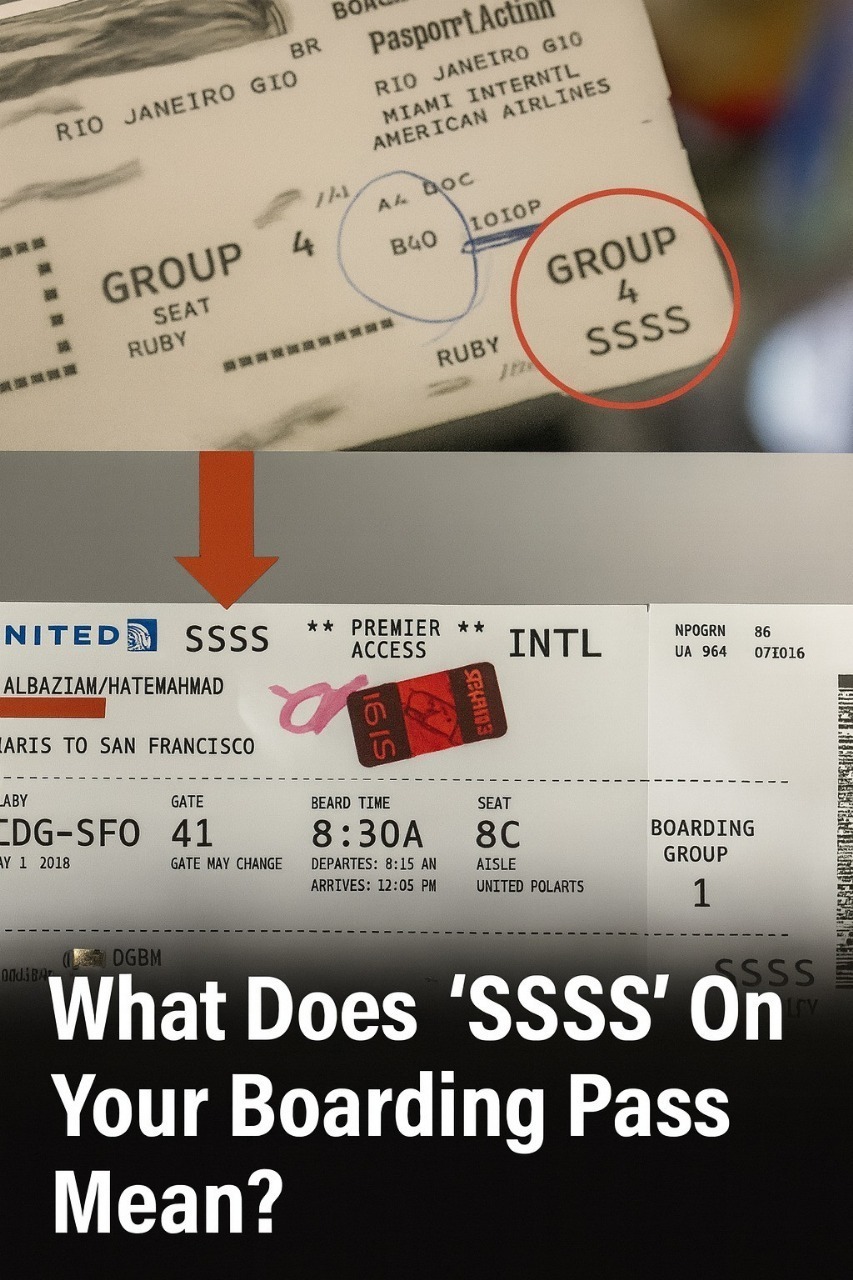
What Does “SSSS” On Your Boarding Pass Mean?
If you’ve ever flown and noticed the letters “SSSS” printed on your boarding pass, you might have felt a wave of confusion, anxiety, or even paranoia. After all, what could four seemingly random letters mean, and why are they on your ticket? Is it a secret code? Are you in trouble? Will you get stuck in some mysterious airport security room?
What Does SSSS Stand For?
“SSSS” stands for Secondary Security Screening Selection. In simple terms, it’s a flag used by airport security agencies to identify passengers who require additional screening before boarding a flight, particularly in the United States.
When you see “SSSS” on your boarding pass, it doesn’t mean you’re a criminal, a terrorist, or in trouble. It simply means that for random or specific security reasons, you have been selected for a more thorough inspection.
Why Does SSSS Happen?
The reasons you might receive an SSSS designation are varied and often confidential, but here are the most common factors:
1. Random Selection
Airports and security agencies often use random screening to ensure security unpredictability. If you’re randomly selected, it’s no reflection on your travel history or behavior.
2. Travel History and Itinerary
Last-minute international flights
Flights originating from countries with heightened security concerns
Unusual flight routes or connecting flights
3. Passport or Visa Issues
If your passport is new, recently renewed, or has visas that might require verification, it can increase the likelihood of secondary screening.
4. Name Matching a Watchlist
Sometimes, travelers’ names resemble those on government watchlists. Even if you are not the person in question, this similarity can trigger SSSS.
Certain online booking patterns, like using multiple email addresses or payment methods, may flag the reservation for extra scrutiny.
6. Other Security Factors
The TSA and other agencies use risk-based algorithms considering behavioral, travel, and intelligence data. Many of these factors are classified for security reasons.
What Happens During SSSS Screening?
Being selected for SSSS doesn’t mean you won’t get on your flight, but it does mean additional steps at the airport:
1. Extra Security Check
You will likely be directed to a separate screening area, where TSA agents or airport security personnel will:
Examine your carry-on baggage and personal items more thoroughly
Conduct a pat-down
Use explosives trace detection swabs on your bags or belongings
2. Additional Documentation Verification
Security personnel may ask to see your passport, visa, or boarding documents again to verify your identity and travel purpose.
3. Questioning
Sometimes, officers may ask about your travel plans, contacts, or destinations. This is standard and part of the screening process.
4. Extra Time Required
Because of these additional steps, SSSS passengers often need extra time at the airport—arriving at least 2–3 hours before a domestic flight and even earlier for international departures is recommended.
Does SSSS Mean You’re on a Terrorist Watchlist?
Not necessarily. It’s a common misconception that seeing SSSS means you’re on a no-fly or terrorist watchlist. While some passengers on watchlists may receive SSSS, many are selected randomly or due to administrative factors.
The TSA has stated that the designation is primarily a security measure, not a punitive one. Millions of travelers receive SSSS every year, and the majority are completely ordinary passengers.
How to Avoid Getting SSSS on Your Boarding Pass
While there’s no guaranteed way to avoid SSSS—since part of it is random—there are a few strategies to minimize the risk:
1. Use the Same Name on All Travel Documents
Ensure that your passport, ticket, and frequent flyer accounts all match exactly. Even small differences (like using “Bob” instead of “Robert”) can trigger additional screening.
2. Book Flights Early and Through Reliable Sources
Avoid last-minute tickets or third-party booking sites that may appear unusual to security algorithms.
3. Avoid Suspicious Travel Patterns
Flights that seem inconsistent or unusual may trigger secondary screening. For instance, very short layovers on complicated itineraries could appear suspicious.
4. Enroll in Trusted Traveler Programs
Programs like TSA PreCheck or Global Entry can reduce the likelihood of SSSS, as they pre-screen you as a low-risk traveler.
5. Maintain a Clean Travel Record
Previous travel issues, like missing flights or incomplete documentation, may affect SSSS selection.
What to Do If You Get SSSS
If you see SSSS on your boarding pass, don’t panic. Here’s how to handle it:
Arrive Early – Give yourself plenty of time for additional screening.
Stay Calm and Polite – Security officers are just doing their job. Being cooperative can make the process smoother.
Have Documentation Ready – Keep your passport, boarding pass, and visas accessible.
Pack Smart – Reduce carry-on items and avoid prohibited objects to speed up inspection.
Expect Delays – Plan for extra time, especially if you have tight connections.
Common Myths About SSSS
There are several myths surrounding SSSS that can cause unnecessary stress:
Myth 1: “SSSS Means You’re on a No-Fly List”
False. While it could be a factor, SSSS is mostly precautionary and often random.
Myth 2: “SSSS Happens Only to International Travelers”
False. Domestic travelers can also be selected for secondary screening.
Myth 3: “You Can’t Fly If You Get SSSS”
False. Being selected simply means extra checks—you can still board your flight if everything clears.
Stories and Experiences of SSSS Travelers
Many travelers have shared their SSSS experiences online, ranging from mildly inconvenient to mildly amusing. Common stories include:
Being pulled aside while others board normally.
Having bags swabbed for explosives or narcotics.
Answering questions about where they were traveling and why.
Spending 10–30 minutes extra at the security checkpoint.
The consensus? It’s annoying but not dangerous. Many passengers even joke that it makes them feel “important” or “famous” for a moment.
International Context: Is SSSS Only in the U.S.?
Yes and no. The term SSSS is specific to U.S. airport security, under the TSA. Other countries have similar measures for secondary screening but may use different terms, processes, or security algorithms. If you’re flying internationally, it’s good to check the country’s security guidelines, though the U.S. is the most commonly associated with SSSS.
SSSS vs. TSA PreCheck
It’s helpful to understand the difference:
SSSS = You’ve been flagged for additional screening.
Continue reading…
