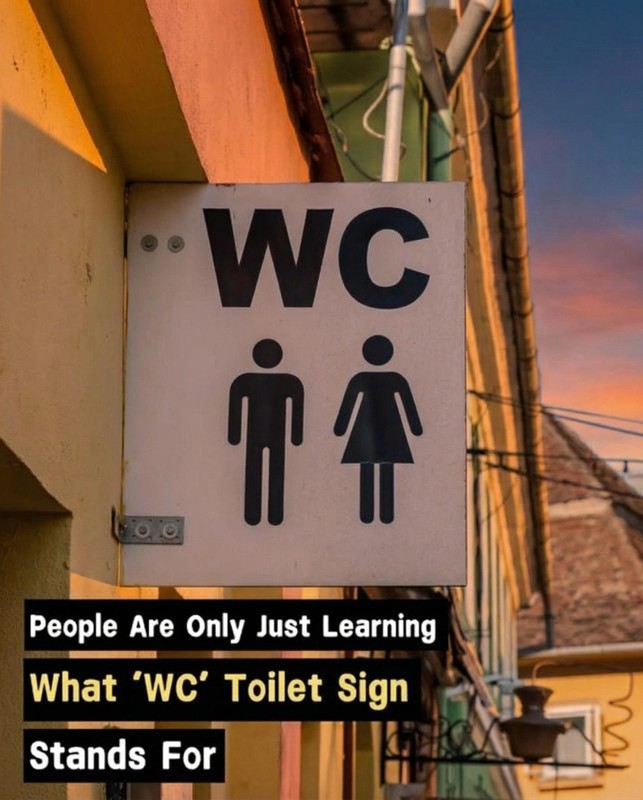
How “WC” Became a Common Term for Restrooms
If you’ve ever traveled across Europe or even parts of Asia, you may have noticed signs with the letters “WC” pointing toward restrooms. To someone unfamiliar, these two letters may seem cryptic. After all, why not just say “toilet,” “bathroom,” or “lavatory”? The history of “WC” is a fascinating blend of language, engineering, and social etiquette, reflecting changes in public health, hygiene, and global communication. In this post, we’ll explore the origins of “WC,” its adoption in different cultures, and why it remains a popular term even today.
“WC” stands for Water Closet, a term that originated in England in the 19th century. To understand the term fully, we need to consider the broader context of sanitation and plumbing in Victorian times.
Before indoor plumbing became widespread, people relied on chamber pots, privies, or outhouses. These were unsanitary, especially in densely populated cities, where outbreaks of cholera and typhoid were common. The Industrial Revolution brought rapid urbanization, and the need for improved sanitation became urgent.
The water closet, as an indoor flushing toilet, represented a major breakthrough. Unlike cesspits or pit latrines, it used water to carry waste away through a connected sewage system. Early water closets were often placed in a small, private room—hence the term “closet” in the name. By the mid-1800s, plumbing innovators such as Thomas Crapper (often mistakenly credited as the inventor of the toilet) popularized the concept in Britain.
Why “Water Closet” Instead of “Toilet”?
The word “toilet” comes from the French toilette, meaning “a little cloth” or “dressing room,” and was originally associated with personal grooming rather than waste disposal. In polite Victorian society, discussing bodily functions directly was considered indecent. Terms like “WC” offered a more discreet, socially acceptable way to refer to a toilet.
Additionally, “closet” in 19th-century English referred to a private room, not necessarily a storage space as it does today. Therefore, “water closet” literally meant a private room with water-based sanitation—a phrase that was both descriptive and euphemistic.
How “WC” Spread Across Europe
The term “WC” became widely recognized outside Britain largely due to the expansion of British engineering and urban planning in the 19th and early 20th centuries. British influence was strong in countries like India, Australia, and parts of Africa, where water closets were introduced in colonial infrastructure projects.
Interestingly, the choice of an abbreviation rather than a word helped avoid linguistic confusion. The letters “WC” could be understood regardless of whether someone spoke French, German, Italian, or English, making it an early example of a universal signage system.
WC vs. Toilet: Cultural Differences
While “WC” is widely understood in Europe and parts of Asia, English-speaking countries, especially the United States, tend to use other terms: “bathroom,” “restroom,” or simply “toilet.” Each term carries subtle cultural connotations:
Bathroom: Used mainly in the U.S., this term emphasizes the room’s bathing function rather than the toilet itself.
Restroom: Another American term, popular in public spaces, emphasizing privacy and politeness.
Toilet: Common in the U.K. and elsewhere, more direct and functional.
Lavatory: A formal or technical term, often seen in airports or on airplanes.
The Role of Signage in Standardizing WC
One reason WC has endured is its prominence on public signs. International travelers need simple, recognizable symbols to navigate foreign cities. Abbreviations like WC are easier to read at a glance than longer words in unfamiliar languages.
In fact, the International Organization for Standardization (ISO) and other global agencies have used WC as a reference in designing restroom symbols. The letters are often accompanied by pictograms representing male and female users, making the concept even more universally understandable.
The Evolution of WC in Modern Times
Today, the term WC has evolved in several ways:
Residential Use: In many English-speaking homes, the word “WC” has largely disappeared, replaced by “bathroom” or “toilet.”
Commercial and Public Spaces: In Europe and Asia, WC is still a standard term on signage, especially in airports, train stations, and shopping centers.
Digital Interfaces: Some hotel booking websites or maps still use WC to indicate toilet facilities, showing its persistence as a globally recognized shorthand.
Continue reading…
