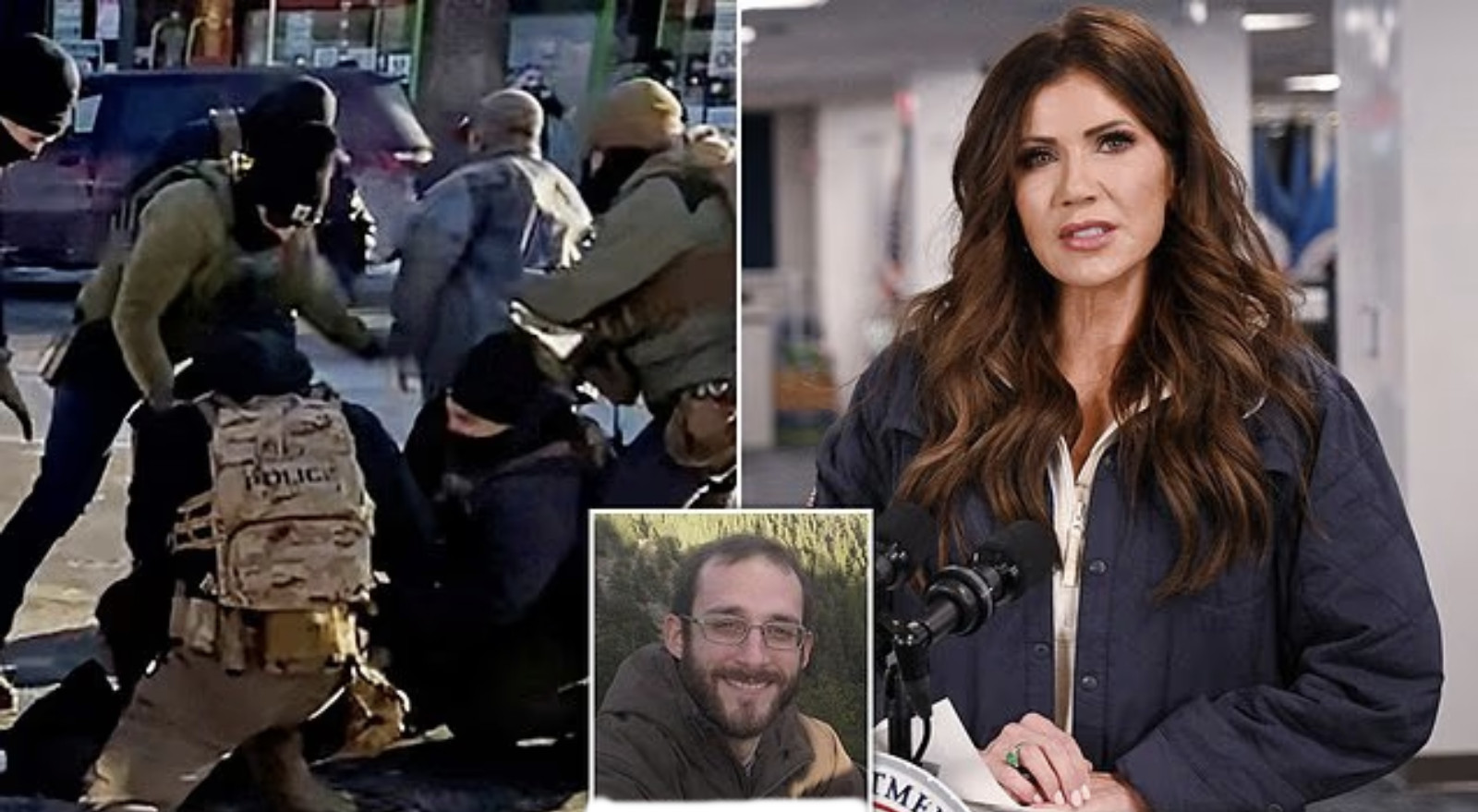
The Minnesota ICE Shootings That Sparked a National Firestorm
To understand why Kristi Noem’s exchange with Peter Doocy drew intense attention and controversy, we need to start with the events that set the stage: the fatal shootings of U.S. citizens by ICE agents in Minneapolis during a federal immigration enforcement operation.
On January 7, 2026, an ICE agent in Minneapolis shot and killed Renée Nicole Good, a 37-year-old U.S. citizen, during a federal immigration operation. Federal officials immediately stated that she “attempted to weaponize her vehicle” and tried to run over officers, justifying the use of lethal force as self-defense.
Yet local law enforcement and eyewitnesses disputed the federal narrative, saying video evidence contradicted key aspects of that account. Minneapolis Mayor Jacob Frey called the federal explanation “garbage” and argued the video shows that the use of force was not justified.
B. Subsequent Shooting of Alex Pretti
Days later, another fatal shooting occurred in Minneapolis when an ICE agent shot Alex Pretti, a 37-year-old ICU nurse, during a separate enforcement action. Once again, federal officials claimed self-defense, but video footage and independent analysis contradicted parts of that account, raising further questions about the use of force and how events unfolded.
C. Broader Backlash and Political Fallout
These shootings triggered:
Nationwide protests and calls for federal accountability.
Calls for investigations, both local and federal.
The Justice Department opening a federal civil rights investigation into Pretti’s shooting.
As scrutiny mounted, the political ramifications spread beyond Minneapolis.
II. Kristi Noem’s Role and Narrative
In early 2026, Kristi Noem — serving as Homeland Security Secretary under President Donald Trump — became a central figure in representing and defending the federal government’s handling of these events.
A. Noem’s Public Statements
Noem repeatedly defended the ICE agents involved, framing both shootings as justified acts of self-defense. She described Good’s actions as “domestic terrorism,” asserting the vehicle was used as a weapon.
She also insisted that local leaders politicized and misrepresented the incidents, accusing them of inflaming public sentiment and undermining law enforcement credibility.
ICE agents followed protocol.
The force used was lawful and necessary.
Federal authorities would cooperate with investigations — though in practice state investigators were later blocked from accessing evidence, leading to further criticism.
B. Implementation of Body-Worn Cameras
Amid growing scrutiny, Noem announced that all Homeland Security personnel in Minneapolis, including ICE agents, would be issued body-worn cameras. This was framed as a transparency measure, though critics said it should have happened long before deadly force was used.
C. Political and Public Opinion Impact
Opinion polls showed significant backlash against Noem’s handling of the situation. Most voters reportedly believed the Trump administration had not given an honest account of the shootings, and a majority expressed reluctance to support Noem’s continuation in her role as DHS Secretary.
III. The Doocy–Noem Confrontation
The national spotlight on the Minnesota shootings carried into mainstream media, including high-profile interviews. One such confrontation occurred on Fox News between Peter Doocy, a senior White House correspondent often known for tough questioning, and Kristi Noem.
A. The Interview
On The Sunday Briefing with Peter Doocy, Noem was pressed on key details surrounding the second fatal shooting (Pretti) and how the administration could justify the use of force. Doocy questioned:
Whether there was definitive evidence that Pretti intended to harm law enforcement as claimed by Noem.
Whether video footage contradicted the federal narrative.
What factual basis existed for the administration’s characterization of the incident.
Doocy asked questions that went to the heart of public uncertainty and skepticism — such as whether anyone heard Pretti threaten officers, or whether evidence clearly supported the administration’s statements.
B. Noem’s Responses
Noem doubled down on the administration’s narrative, asserting that ICE and Border Patrol agents acted defensively and within protocol, without offering additional evidence beyond DHS statements.
Her stance was essentially:
Federal agents acted lawfully and according to training.
Claims of injustice were politically motivated.
Available video and evidence supported her public account.
C. The Political Friction
This interview encapsulated the broader political tension:
Continue reading…
